12 Clever Pantry Organisation Ideas for a Calm, Clutter Free Kitchen
A pantry can hold plenty of food and still feel as though there’s never enough space.
Packets disappear behind tins, half-used ingredients get forgotten and shelves gradually become so crowded that finding anything means moving everything else first.
The good news is that you don’t necessarily need a bigger pantry.
A few simple changes can make existing shelves considerably easier to use — whether you have a walk-in pantry, a kitchen cupboard or just a couple of shelves dedicated to food storage.
Here are 12 practical pantry organisation ideas to help make everyday cooking and shopping easier.
Disclosure: As an Amazon Associate, Useful Home Edit earns from qualifying purchases. If you buy through one of our Amazon links, we may earn a small commission at no extra cost to you.
1. Take everything out before reorganising
It can be tempting to start rearranging products while they’re still on the shelves, but an empty pantry is much easier to organise properly.
Take everything out, wipe down the shelves and check expiry dates as you go.
You’ll probably also discover several forgotten ingredients hiding at the back.
2. Group similar foods together
Creating simple categories makes it much easier to see what you already have.
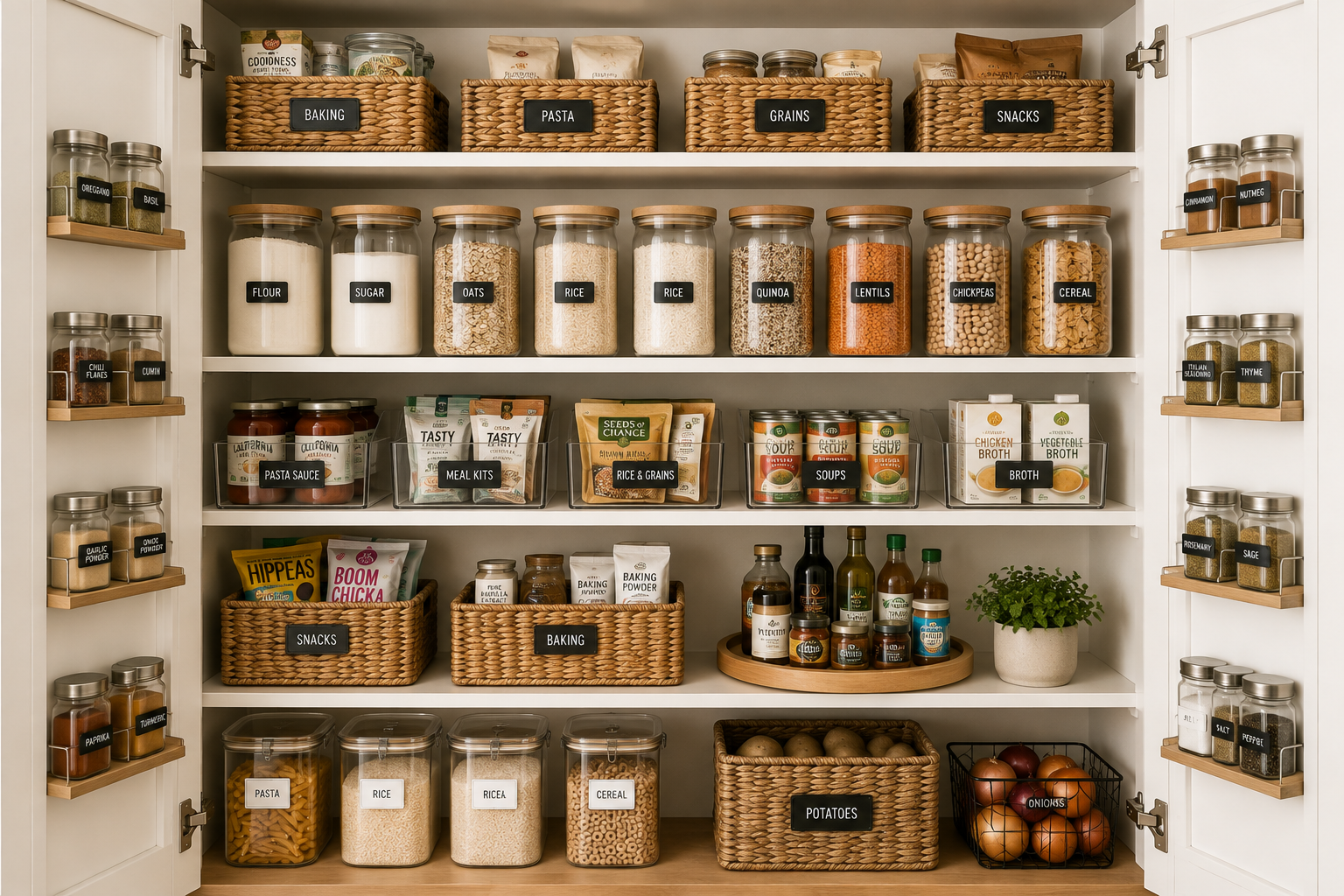
Keep breakfast foods together, group baking ingredients, create an area for snacks and store tins or jars in their own section.
The categories don’t need to be complicated. They simply need to make sense for the way your household uses the kitchen.
3. Use clear containers where they genuinely help
Clear containers (paid link) can make frequently used dry ingredients easier to see and store.
They’re particularly useful for foods such as pasta, rice, cereal, flour and oats.
But you don’t need to decant everything you buy. Use containers where they make the pantry more practical rather than creating another household chore.
4. Add baskets for packets and smaller items
Packets can be difficult to keep upright and often disappear behind larger products.
Storage baskets provide an easy way to group things such as snacks, baking supplies or packets of rice and grains.
Choose baskets (paid link) that can be pulled forward easily so you can see what’s hiding at the back.
5. Make better use of deep shelves
Deep pantry shelves can hold a lot, but they’re also excellent at hiding food.
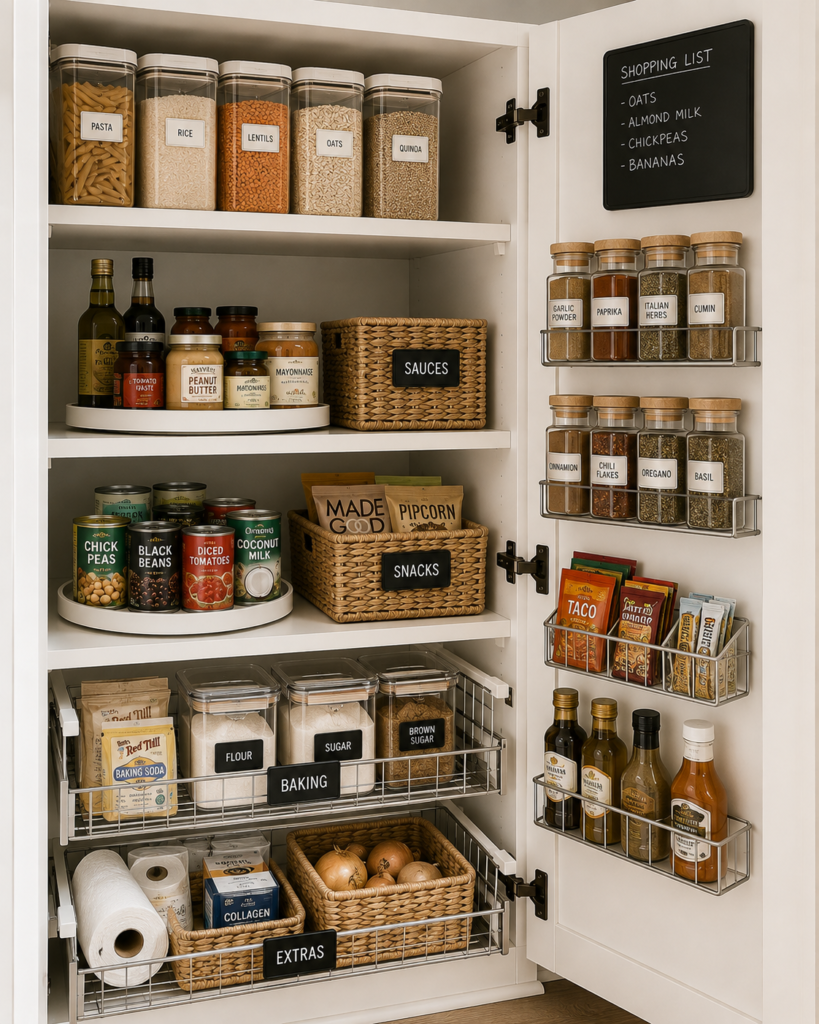
Use pull-out baskets, trays or containers to bring products at the back towards you.
Keeping taller items behind shorter ones can also improve visibility.
6. Add shelf risers for tins and jars
If tins and jars are arranged in several rows, the products at the back can become almost invisible.
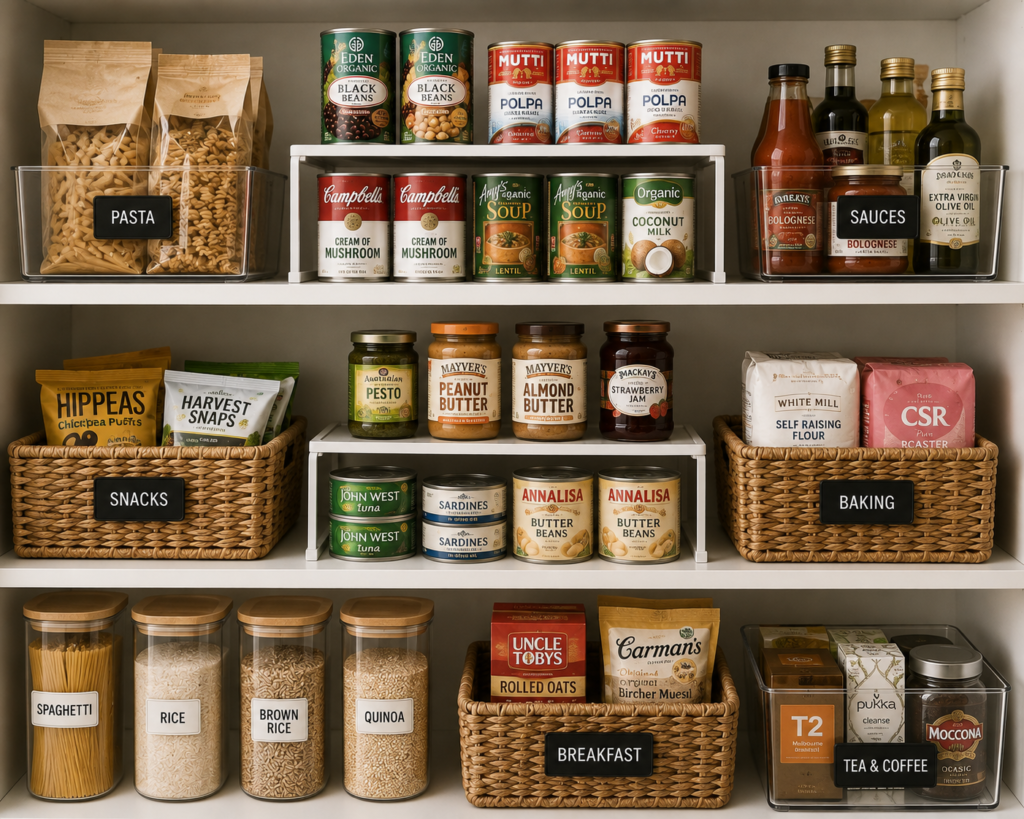
A simple shelf riser (paid link) creates different levels so you can see more of what you have at a glance.
This is particularly useful for canned foods, sauces and smaller jars.
7. Use a turntable in awkward corners
Corners and deep shelves can be frustrating because products are difficult to reach.
A rotating turntable or ‘lazy susan’ (paid link) allows you to bring items towards you without removing everything in front.
Use one for sauces, condiments, oils or other bottles you reach for regularly.
8. Keep everyday foods within easy reach
The foods you use most often deserve the easiest-to-access shelves.
Keep everyday breakfast ingredients, snacks or cooking staples somewhere you can reach without bending down or moving other products.
Save very high or low shelves for less frequently used supplies. Using a slimline storage trolley (paid link) also works well.
9. Create a dedicated snack area
Snacks have a habit of spreading throughout a pantry.
Giving them their own basket (paid link), drawer or shelf keeps packets together and makes it easier to see what’s available.
This can also help prevent several half-open packets of the same thing accumulating.
10. Keep back-up supplies together
Buying extras can be useful, but spare products can easily make a pantry feel overcrowded.
Create one designated area for back-up food and household staples.
Before adding something to your shopping list, check this area first.
11. Don’t overfill containers and shelves
A pantry doesn’t need to be packed completely full to be useful.
Leaving a little breathing room makes products easier to remove and return and gives you space for new groceries.
If every shelf is permanently overflowing, consider whether there are foods you no longer use or quantities you don’t really need to keep.
12. Give the pantry a quick weekly reset
Pantry organisation works best when it’s maintained little and often.
Before doing your grocery shopping, spend a few minutes returning stray products to their categories and checking what needs using.
Move anything approaching its expiry date towards the front.
A short weekly reset can prevent the pantry from gradually returning to chaos.
A practical pantry is better than a perfect pantry
You don’t need rows of identical containers or perfectly matching labels to have an organised pantry.
The real goal is much simpler: you should be able to see what you have, find what you need and put groceries away without rearranging the entire cupboard.
Start with the part of your pantry that currently causes the most frustration.
One basket, shelf riser or turntable may make a surprisingly big difference.
Over time, those small improvements can create a kitchen that feels calmer and considerably easier to use.
Looking for more practical home ideas?
Explore our latest organisation and storage ideas for simple ways to create a calmer, easier-to-manage home.