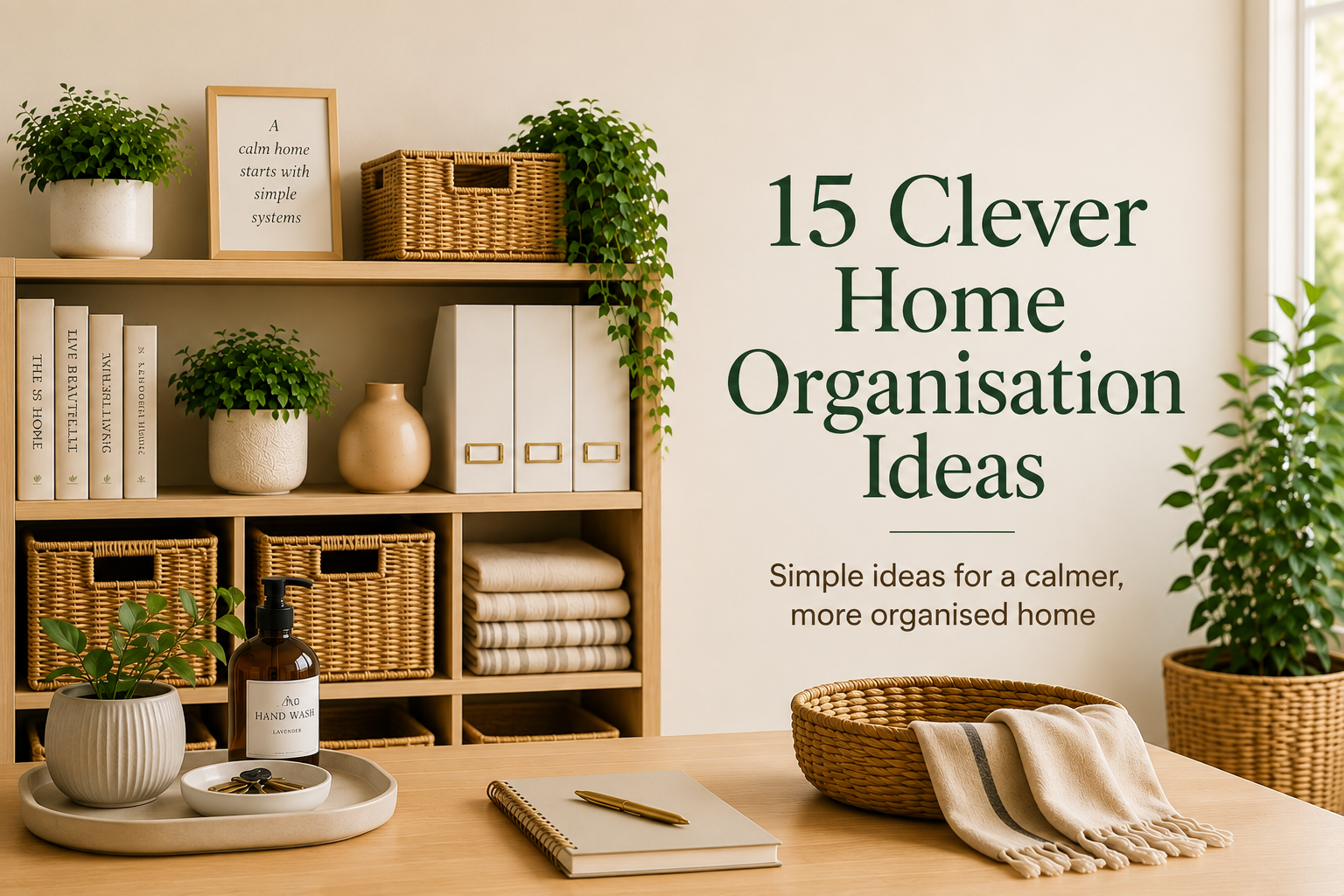
15 Clever Home Organisation Ideas for a Calmer Home
A more organised home doesn’t have to mean labelled containers in every cupboard or spending an entire weekend decluttering. Often, a few simple changes can make everyday spaces easier to use, easier to tidy and much calmer to live in.
These home organisation ideas focus on practical improvements you can make one area at a time. Start with the places that cause you the most frustration, choose the ideas that suit your home, and leave the rest for another day.
Disclosure: As an Amazon Associate, Useful Home Edit earns from qualifying purchases. If you buy through one of our Amazon links, we may earn a small commission at no extra cost to you.
1. Give everyday items a proper home
One of the easiest ways to reduce clutter is to decide where frequently used items belong. Keys, post, chargers, bags and other everyday essentials quickly create visual clutter when they don’t have a designated place.
A small basket, tray or organiser near the area where you naturally use or drop these items can make tidying almost automatic.
2. Use baskets to contain visual clutter
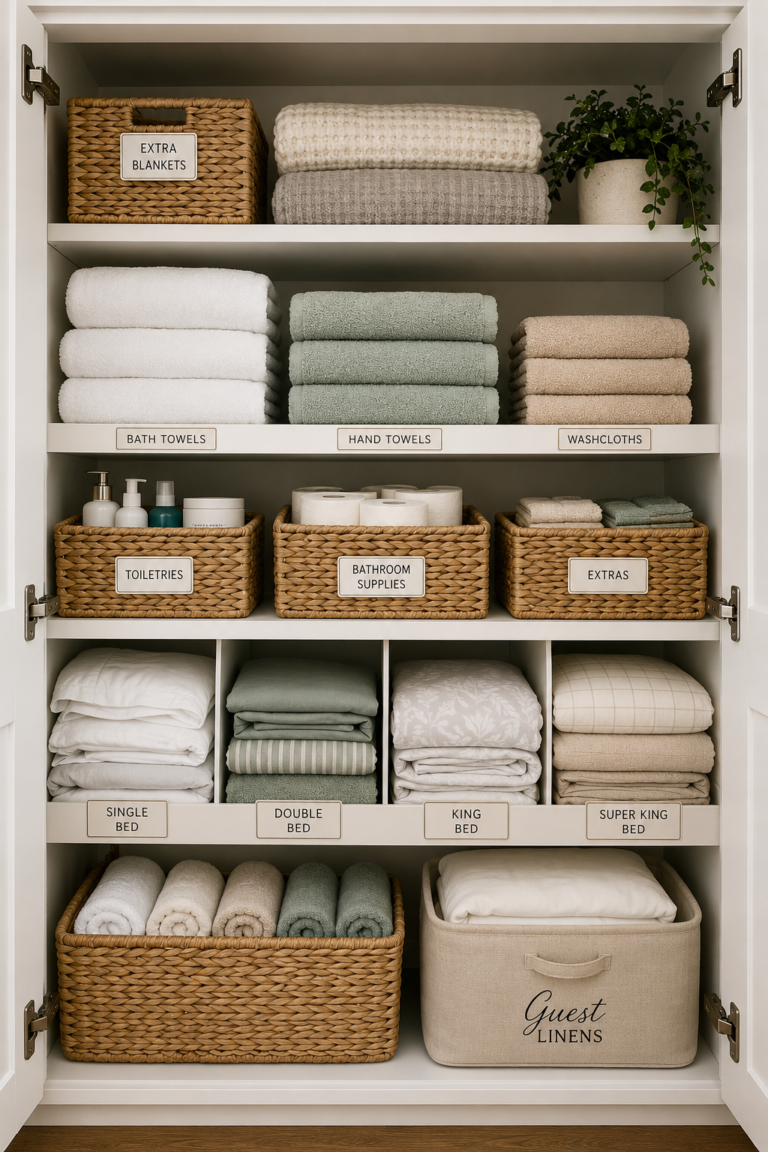
Open shelves can look untidy surprisingly quickly. Baskets are an easy way to group smaller items together while keeping shelves looking calm and organised.
Choose baskets (paid link) that fit the shelf properly and use them for categories such as cables, cleaning supplies, spare toiletries, children’s items or everyday household essentials.
3. Add drawer dividers where clutter builds up
Drawers are useful for keeping things out of sight, but without a little structure they can quickly become a jumble. Drawer dividers create simple boundaries so everything has somewhere to go.
Start with a drawer you use every day, such as the kitchen utensil drawer, bathroom drawer or desk. Measure the inside before buying organisers so you can make good use of the available space.
4. Make better use of vertical space
When cupboards and shelves feel full, look upwards. Often there is unused space above the things you’re already storing.
Shelf risers (paid link), stackable organisers and hooks can help you use more of the height available without making everything difficult to reach. This can be especially useful in smaller kitchens, bathrooms and utility spaces.
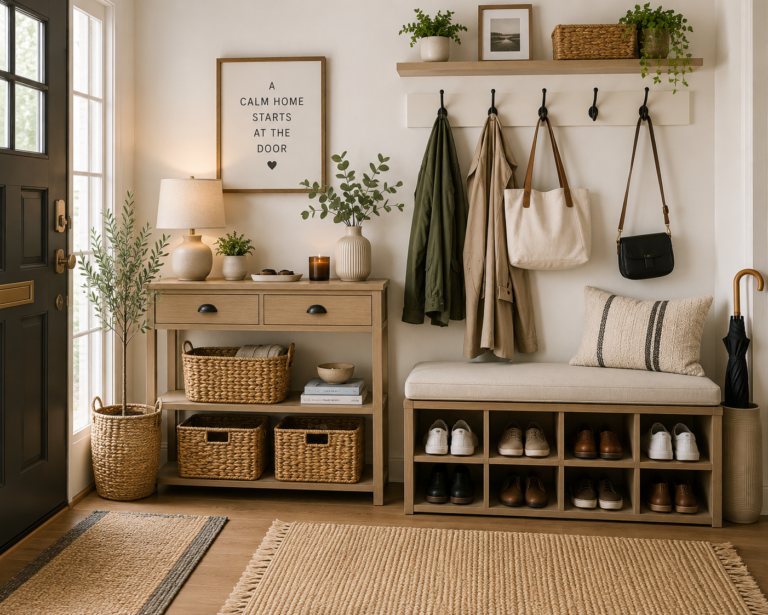
5. Create a simple drop zone by the door
Choose one small area near the entrance for the things that tend to get dropped as soon as you arrive home.
A tray for keys (paid link), hooks for bags and coats, and a basket for items that need to go back upstairs can prevent everyday clutter from spreading through the house. Keep the system simple enough that everyone can actually use it.
6. Organise cupboards by category
Instead of squeezing things into whichever space is available, group similar items together. In a kitchen, for example, you might keep baking ingredients together, breakfast items together and snacks in another area.
This makes it easier to see what you already own and can help prevent duplicate purchases. It also makes putting things away much more straightforward.
7. Use clear containers where visibility helps
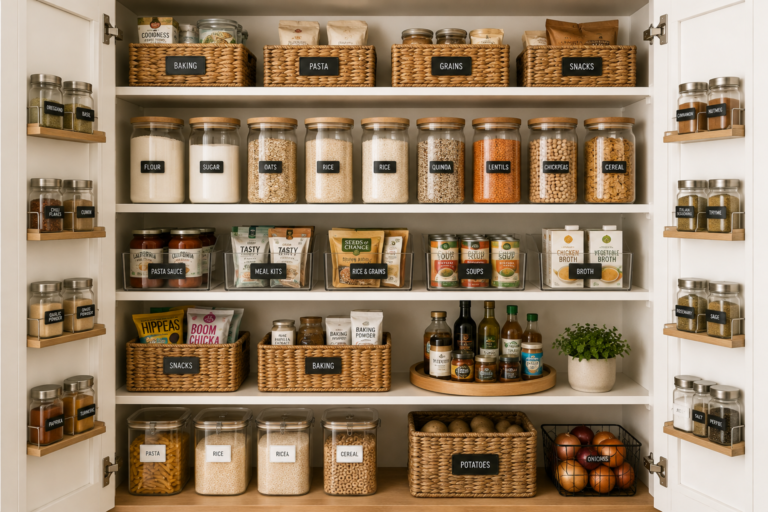
Clear storage can be useful when being able to see the contents saves time. Pantry ingredients, craft supplies and smaller household items are good examples.
You don’t need to decant everything you own into matching containers. Use them selectively where they genuinely make a cupboard or shelf easier to use.
8. Make awkward spaces work harder
Corners, narrow cupboards, the backs of doors and spaces underneath shelves are easy to overlook.
Before buying more storage furniture, look at the unused areas you already have. An over-door organiser, narrow basket, shelf insert or a few well-positioned hooks can sometimes solve the problem without taking up any additional floor space.
9. Keep frequently used items within easy reach
Good organisation isn’t about hiding everything away. The things you use most often should usually be the easiest things to reach.
Keep everyday items between roughly waist and eye level where possible, and reserve higher shelves or harder-to-reach cupboards for things you use less frequently. This small change can make an organised space much easier to maintain.
10. Create a simple paperwork system
Paper has a habit of accumulating on kitchen worktops and tables, so give incoming paperwork somewhere specific to go.
Try separating it into just a few useful categories, such as to action, to file and to recycle. Deal with the pile regularly rather than creating an elaborate filing system (paid link) that becomes another job to maintain.
11. Organise under the sink
The cupboard under the sink can easily become a collection of half-used bottles, cloths and cleaning products. Start by taking everything out, disposing of anything you no longer need and grouping similar products together.
Small baskets or handled caddies can make products easier to reach, while stackable storage can help make better use of the height inside the cupboard.
12. Give cleaning supplies a dedicated space
Keeping cleaning supplies together makes it much easier to see what you have and grab what you need.
Depending on your home, that might mean one cupboard for everything or a small cleaning caddy containing the products you use most often. Avoid keeping unnecessary duplicates and periodically check for products you no longer use.
13. Declutter one small area at a time
Trying to organise an entire home at once can quickly become overwhelming. Instead, choose one small, clearly defined area — a drawer, shelf, cupboard or worktop — and finish that before moving on.
Small wins make a noticeable difference and are much easier to fit into everyday life. Even ten minutes spent improving one problem area can make your home feel more manageable.
14. Keep surfaces intentionally clear
Clear surfaces can instantly make a room feel calmer, but that doesn’t mean every worktop and table needs to be completely empty.
Decide what genuinely deserves to stay out and give everything else somewhere to live. A small tray can also help contain items you want to keep accessible without allowing them to spread across the whole surface.
15. Use the one-minute reset
One of the simplest ways to maintain an organised home is to deal with tiny jobs before they become bigger ones.
If something takes around a minute to put away, try doing it there and then. Returning a product to a cupboard, hanging up a coat or putting paperwork in the right place takes very little time but prevents clutter from gradually building up.
A calmer home, one small change at a time
A more organised home isn’t about making every room look perfect. It’s about creating simple systems that make everyday life a little easier.
You don’t need to tackle all 15 ideas at once. Choose one area that’s currently frustrating you and start there. Once that space is working better, move on to the next.
The best organisation system is ultimately the one that’s simple enough to keep using.
Looking for more practical home ideas?
Keep going with our small kitchen storage ideas, bedroom storage ideas, or under-sink storage ideas for more simple ways to create a calmer, better-organised home.