
15 Useful Things You Need When Moving Into a Renovation House
Moving into a house that’s about to be renovated is very different from moving into a finished home.
You might have the keys, but that doesn’t necessarily mean you have wardrobes, reliable lighting, enough working sockets or even somewhere sensible to unpack your belongings.
If you’re living in the property while work is taking place, a few practical purchases can make the temporary chaos considerably easier to manage.
From temporary clothes storage and labelled boxes to rechargeable lights and power banks, here are 15 useful things worth having when moving into a renovation house.
Disclosure: As an Amazon Associate, Useful Home Edit earns from qualifying purchases. If you buy through one of our Amazon links, we may earn a small commission at no extra cost to you.
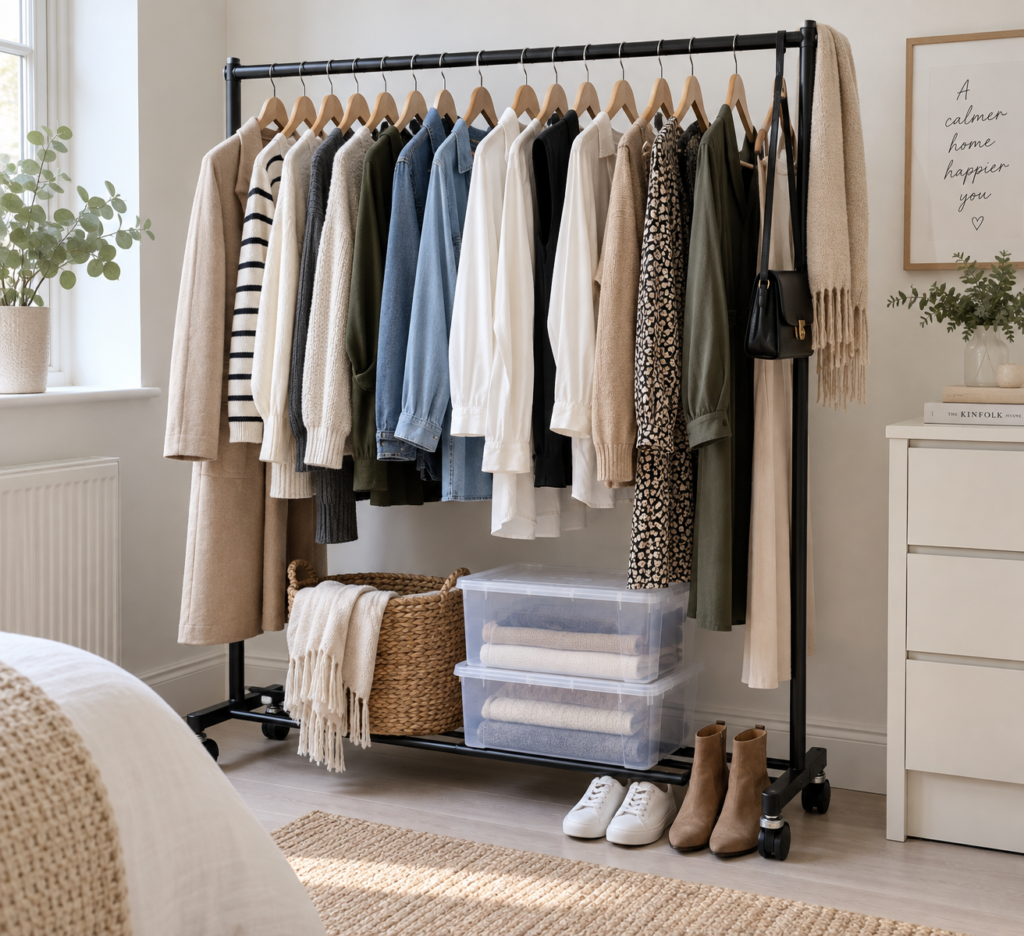
1. Use a clothes rail before buying wardrobes
If bedrooms are going to be plastered, decorated or reconfigured, there’s little point rushing to install permanent wardrobes.
A sturdy clothes rail gives you somewhere to hang everyday clothes in the meantime and can easily be moved between rooms as the renovation progresses.
Look for a heavy-duty rail if it’s going to be your main wardrobe for several months, particularly if you’ll be hanging coats and heavier clothing.
2. Store belongings in clear, stackable boxes
Cardboard moving boxes are useful on moving day, but they’re not always ideal for belongings that might remain packed for months.
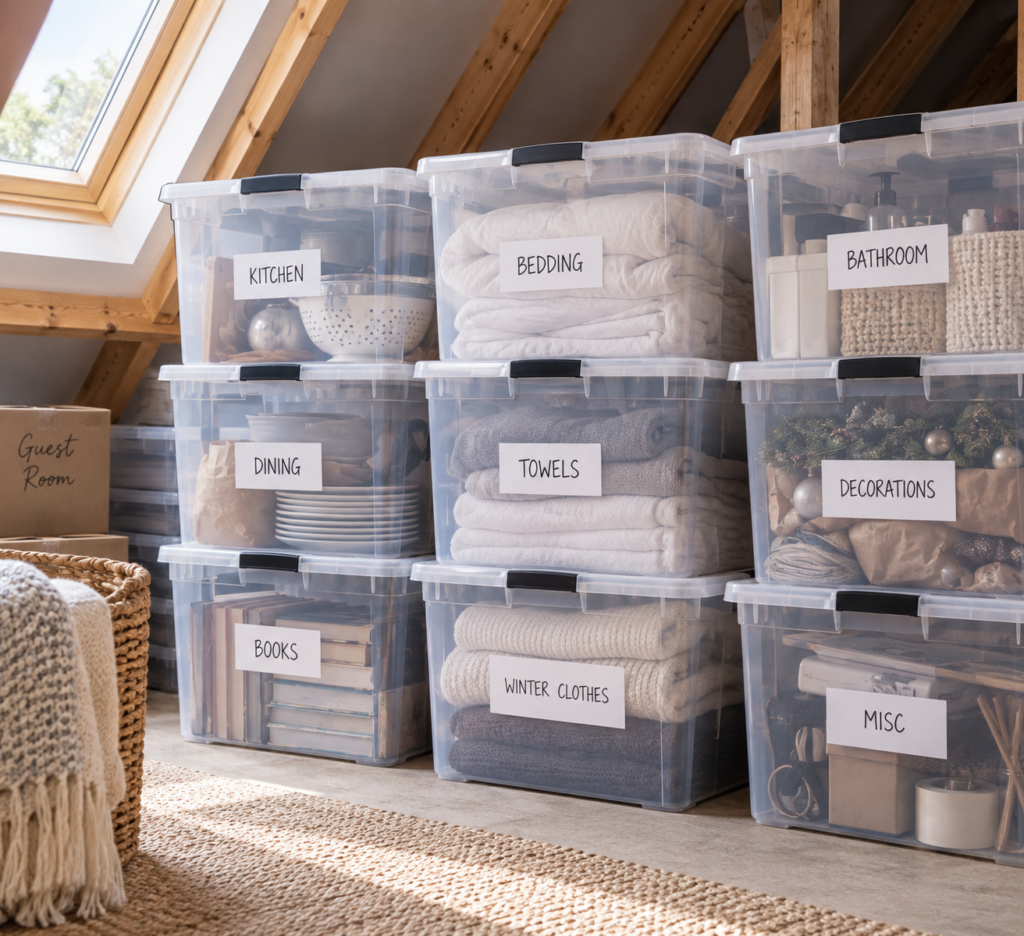
Clear lidded storage boxes make it easier to see what’s inside and can be stacked neatly in a loft, garage or spare room.
Choose a few consistent sizes if possible. They’ll stack more efficiently and can eventually be reused for loft or household storage after the renovation.
3. Label everything properly
When most of your belongings are packed away, good labels can save a surprising amount of time.
Instead of simply writing Kitchen on a box, use large removable labels and be more specific — Kitchen: baking equipment or Bedroom: winter clothes, for example.
Label the side as well as the lid so you can identify boxes without having to unstack them.
4. Use vacuum bags for bulky textiles
Duvets, spare bedding, towels and out-of-season clothes can take up an enormous amount of valuable storage space.
Vacuum storage bags can reduce their volume considerably and are particularly useful if you’re storing belongings in the loft or one designated room while the rest of the house is being worked on.
Keeping textiles enclosed can also help protect them from the dust that inevitably seems to travel around a renovation.
5. Keep rechargeable lamps around the house
If you’re having a full rewire, there may be periods when rooms don’t have the lighting you’d normally expect.
A couple of rechargeable table lamps can be moved wherever they’re needed and are much nicer to live with in the evening than relying on a phone torch.
USB-rechargeable versions are particularly convenient, and once the renovation is finished they can be reused elsewhere around the home.

6. Try rechargeable wall lights for dark areas
Rechargeable wall lights can also provide temporary lighting without committing to permanent fittings.
They can be particularly useful on landings, in hallways or in bedrooms while electrical work is taking place.
Magnetic rechargeable versions can often be removed easily for charging and later reused inside cupboards or wardrobes.
7. Keep a large power bank charged
A high-capacity power bank is worth having nearby if electrical work means the power needs to be switched off.
It allows you to keep phones and smaller USB devices charged while electricians are working.
This is particularly useful when you’re spending long days at the house dealing with tradespeople, deliveries and seemingly endless renovation decisions.
8. Have a rechargeable work light
Decorative rechargeable lamps are useful for living; a brighter rechargeable work light is useful when you actually need to see what you’re doing.
Keep one with your DIY equipment for lofts, cupboards, garages and rooms where permanent lighting hasn’t yet been installed.
A rechargeable head torch can also be surprisingly useful when you need both hands free.
9. Try to contain renovation dust
Renovation dust has an impressive ability to reach parts of the house nowhere near the actual building work.
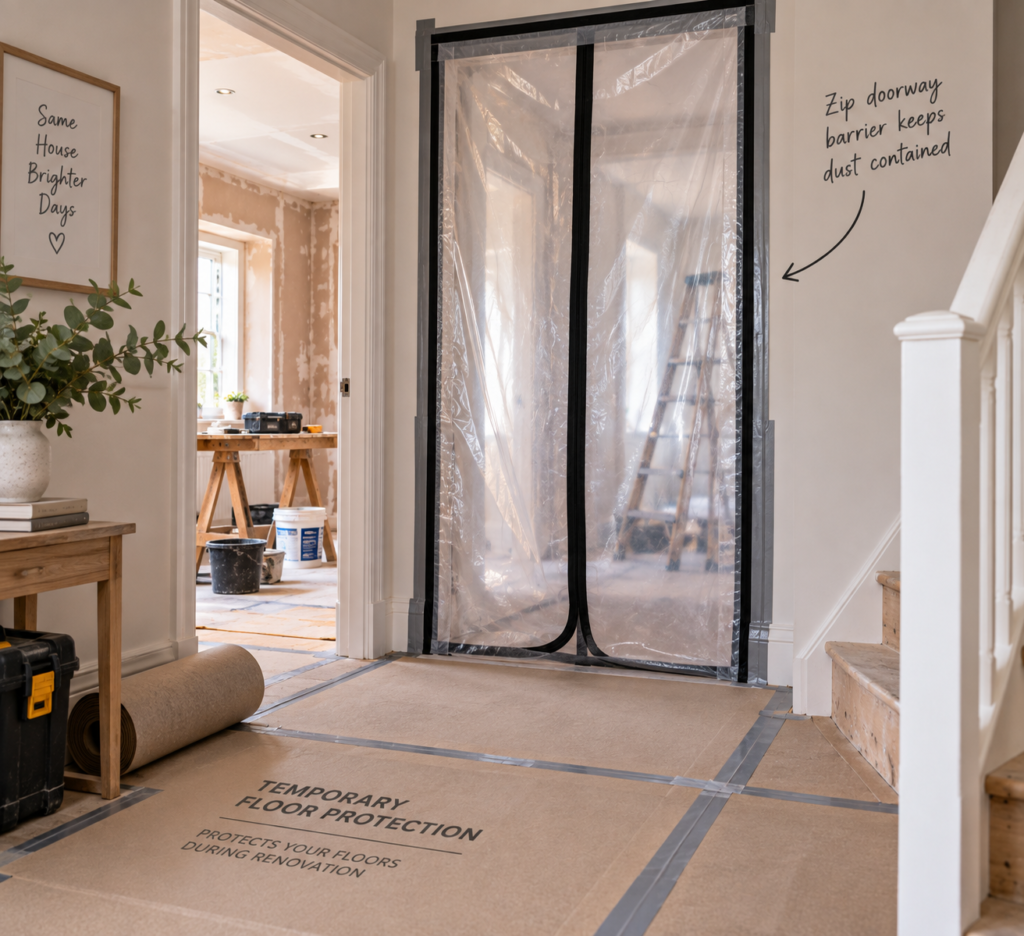
If you’re living in one part of the house while another is being renovated, a zip doorway dust barrier can help separate the two areas while still allowing you to walk through.
It won’t make the house dust-free, but containing as much of the mess as possible makes everyday cleaning considerably easier.
10. Protect areas you’ve already finished
Eventually, a whole-house renovation reaches the awkward stage where newly finished rooms sit alongside areas that are still building sites.
Suitable temporary floor protection can help protect finished floors while tools, tradespeople and materials are still moving through the house.
It’s much easier to protect a new floor properly than repair damage afterwards.
11. Keep flexible baskets for moving things around
Large flexible baskets are extremely useful when the contents of your house are constantly moving from one room to another.
Use them for laundry, cleaning products, decorating supplies, cables or all the miscellaneous things that haven’t yet found a permanent home.
They’re easy to carry and will still be useful as laundry or household storage once the renovation is complete.
12. Make a portable cleaning caddy
When cupboards and utility areas aren’t finished, cleaning products can quickly end up scattered around the house.
Keep everyday supplies together in a portable cleaning caddy containing cloths, cleaning spray, gloves, kitchen roll and other essentials.
Then you can simply carry the entire caddy to whichever room you’re working in.

13. Create a temporary kitchen
If your kitchen is being removed, plan how you’ll actually prepare food and drinks before demolition starts.
A kettle, microwave and perhaps an air fryer can create a surprisingly functional temporary kitchen when combined with a small folding table or spare unit.
You don’t need to buy everything new. The aim is simply to have a workable setup that gets you through the period without a proper kitchen.
14. Add temporary hooks instead of permanent storage
There isn’t much point drilling lots of new storage into walls that are shortly going to be plastered or redecorated.
Over-door hooks can provide instant storage for coats, towels, dressing gowns and bags without making permanent changes.
Once the renovation is complete, simply move them to a utility room, spare bedroom or somewhere else they’ll be useful.
15. Keep renovation paperwork together
Renovations generate an extraordinary amount of paperwork.
Quotes, receipts, warranties, instruction manuals and invoices can quickly disappear if they’re left around the house.
Keep a simple expanding document organiser somewhere accessible and create sections for electrical work, plumbing, kitchen, bathroom, appliances, receipts and warranties.
Even if you keep digital records as well, it’s useful to have somewhere for the paperwork you’re inevitably handed during the project.
Temporary solutions can make renovation life much easier
You don’t need to create permanent storage solutions while half your house is still changing.
In fact, some of the most useful things during a renovation are products that can move and adapt with you.
A clothes rail can move between bedrooms, storage boxes can eventually go into the loft and rechargeable lights can later be used in cupboards or other areas without sockets.
Concentrate on making the house work for you now, rather than trying to organise it as though the renovation is already finished.
Looking for more practical home ideas?
Explore our latest organisation and storage ideas for simple ways to create a calmer, easier-to-manage home.